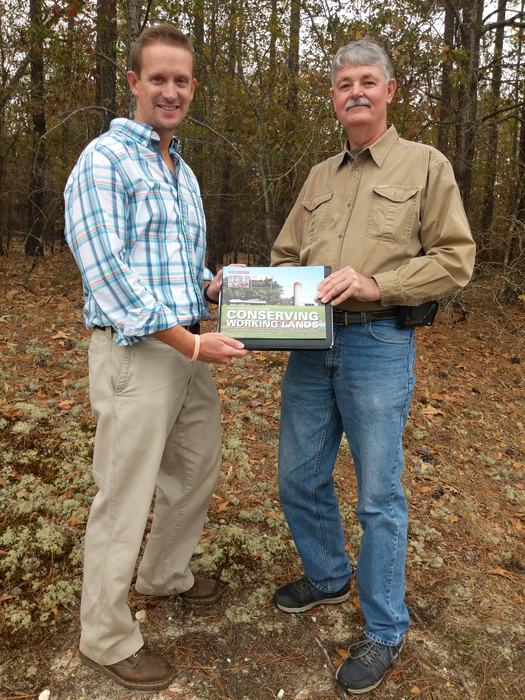
The majority of land holdings in North Carolina are held by the private landowner, whether in forested land, commercial farms, or a mix of the two. While owning land can bring great satisfaction to North Carolina landowners, in social, economic, and environmental returns, owning land can also be beset with conflict. Familiar land-related issues facing an individual property owner are often known as trespassing, vandalism, stealing of property including natural resources, the use of one’s property as a personal dump, the increase in costs to maintain one’s land, or heir’s property issues. Other land-related issues are those situations that occur between neighboring landowners such as property-boundary disputes or a lack of notification for prescribed burn. Still other land-related issues are known as cross-boundary types of issues such as fragmented landscapes.
Connecting working landscapes (including natural landscapes) are essential – for clean water, healthy ecosystems, vibrant communities and economies, climate resilience, cultural heritage, outdoor recreation, and more. Conserving our landscapes means working together at the landscape scale that makes an enduring difference. Economic vitality and conservation go hand-in-hand as do the principles of collaborative practice including conflict management, negotiating from interests, innovative programs, and shared responsibility and accountability.
The following innovated land management strategies have occurred across the US as a way to develop options that allow mutual gain for the parties involved.- Water as Conservation Easement A groundwater conservation easement is an agreement from a farmer who plans to sell his land to the Rio Grande Water Conservation District, which will work to re-vegetate his acres with native plants instead of his traditional acres of beans. The water he would have used to grow his annual crops will remain in the aquifer so that other farmers have more water to use to manage their crops in the surrounding area.
- White House Cooperative Conservation In 2004, President George W. Bush signed executive order of Facilitation of Cooperative Conservation, directing federal agencies that oversee environmental and natural resources policies and programs to promote cooperative conservation in full partnership with states, tribes, and individuals (landowners). The 2005 Conference on Cooperative Conservation presented examples of working toward collaborative efforts across the US. Examples from the Southeast presented 2005 case studies.
- Managing for Wildlife Conflicts
- Safe Harbor Agreements Enroll private landowners and Army in new conservation approaches in the Southeast. Safe Harbor Agreements and compatible use buffers used on and off Army bases contribute to the recovery of the endangered Red-cockaded woodpecker. Safe Harbor Agreements have supported more than two dozen endangered species on more than three million acres of privately-owned land.
- Wildlife on the Working Landscape
As part of the American Farmland Trust's Farms Under Threat Program, a critical component of this initiative will map wildlife habitat and connectivity corridors on agricultural land. This will help inform efforts to balance the production of food, fiber, and energy with the need to conserve and safeguard biodiversity. - Beyond Conflict: Sustaining Economic Vitality in the Working Wild In 2021, land stewards are working to seek options in reduction of large carnivore conflict with partners from the Conflict on Working Lands Conservation Innovation Grant and Conflict Reduction Consortium.